Credential or Fabrication? The Case for a New Verification Standard in Expert Networks
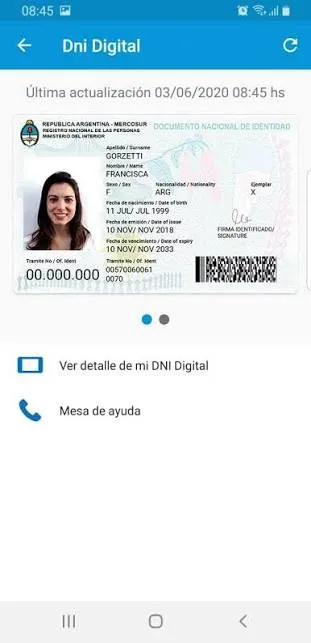
Photo: Argentine Government, CC BY 4.0, via Wikimedia Commons
Opinion | IFO Network
For most of the past century, professional credentialing operated on a relatively stable set of assumptions. A degree from a recognized institution, a license issued by a state board, a certification earned through examination — these markers carried weight because the institutions behind them were difficult to fake and widely understood. A hiring committee, a conference organizer, or a prospective client could look at a credential and reason, with some confidence, that it represented a verifiable achievement.
That assumption is now under serious pressure. The same generative AI systems that have transformed content production have begun to erode the integrity of credentialing itself. Fabricated academic records, AI-generated publication histories, deepfake video testimonials, and algorithmically constructed professional profiles are no longer theoretical threats. They are documented realities appearing with increasing frequency on the platforms where expert communities gather and reputations are built.
The implications for legitimate professionals are severe — and the response from the institutions responsible for credentialing has been, to put it charitably, inadequate.
The Anatomy of a Fabricated Expert
To understand the scale of the problem, it helps to consider what a sophisticated credential fabrication looks like in 2025. It is not a crude forgery of a single document. It is a coordinated construction of a professional identity: a LinkedIn profile with a plausible employment history, an academic record that references real institutions without triggering their verification systems, a portfolio of publications that may cite actual journals while attributing authorship falsely, and — increasingly — video content that places a fabricated persona in the visual context of real professional events.
The detection challenge is not merely technical. Human reviewers, even experienced ones, are poorly equipped to identify this kind of layered fabrication without systematic support. Research on deepfake detection published by Stanford's Internet Observatory has consistently found that individual observers, regardless of their technical sophistication, perform near chance level when evaluating unfamiliar AI-generated content without contextual aids.
For professional networks and knowledge communities, this creates a structural vulnerability. The trust that makes expert networking valuable — the confidence that the person you are engaging with has the background they claim — cannot be maintained through manual review alone at any meaningful scale.
Why Legitimate Experts Bear the Burden
Here is the part of this conversation that deserves more attention than it typically receives: the verification crisis does not affect all professionals equally. The individuals most disadvantaged by the proliferation of fabricated credentials are not the fabricators. They are the legitimate experts who now must work harder to prove the authenticity of achievements that are entirely real.
Consider the experience of a board-certified physician in internal medicine seeking to contribute to a health information platform. Her credentials are verifiable through the American Board of Internal Medicine's public database. Her publication record is indexed in PubMed. Her institutional affiliation is documented and current. Yet on the same platform, a fabricated persona with a convincing AI-generated profile may attract comparable engagement — or more — because the platform lacks the infrastructure to surface the difference between them.
The physician's legitimate credentials become, paradoxically, a source of friction rather than an advantage. She must navigate additional verification steps, respond to skepticism that would not have existed a decade ago, and compete for credibility with profiles that have no authentic foundation at all. The verification burden falls on the honest professional.
This is the trust deficit in concrete form: a systemic transfer of effort and cost onto the people who have done nothing wrong.
Three Standards Worth Taking Seriously
Addressing this problem requires more than incremental improvements to existing systems. It requires a reconceptualization of what expert verification means in an environment where traditional credential proxies are no longer reliable. Several approaches merit serious consideration.
Blockchain-based credentialing. The core appeal of distributed ledger technology for credential verification is its resistance to retroactive falsification. A credential issued and recorded on a blockchain — whether a degree, a professional certification, or a peer-reviewed publication record — creates a timestamped, tamper-evident record that can be verified independently of the issuing institution. Several US-based initiatives, including the MIT Digital Diploma pilot and the work of the Digital Credentials Consortium, have demonstrated the technical viability of this approach. The remaining challenge is adoption: blockchain-based credentials are only as useful as the breadth of institutions willing to issue and recognize them.
Reproducible research and transparent methodology standards. For experts whose authority derives from intellectual work rather than institutional position, the most durable form of verification is the ability to show one's work. The open science movement in US academic research has made significant progress in establishing norms around data sharing, pre-registration, and reproducibility. Extending these norms into professional knowledge communities — requiring that claims be accompanied by documented reasoning and accessible evidence — creates a verification standard that AI-generated personas cannot easily replicate, because it demands an ongoing, interactive relationship with real-world data.
Institutional partnership verification layers. Professional networks that partner directly with credentialing institutions — state licensing boards, accredited universities, professional associations — can offer verification at a level of confidence that self-reported credentials cannot match. This is not a novel concept; background screening services have operated on this principle for decades. What is new is the technical capacity to integrate these verification partnerships into real-time network infrastructure, creating a persistent, visible signal of verified status that travels with a professional's profile across interactions.
The Argument for Network-Level Accountability
Individual verification tools matter, but they are insufficient on their own. The deeper issue is that professional networks — including the platforms where experts connect, share research, and build reputations — have not yet accepted that verification infrastructure is a core responsibility, not a premium feature.
This is a position I hold with some conviction: a professional network that profits from expert participation has an obligation to protect the integrity of the credentialing environment in which that participation occurs. Treating verification as optional, or as a task delegated entirely to individual users, is not a neutral stance. It is a policy choice that systematically advantages fabricators over authentic professionals.
Networks that take this responsibility seriously will need to invest in the institutional partnerships, technical infrastructure, and editorial standards that make meaningful verification possible. Those that do not will find that the trust deficit compounds over time — driving the most credentialed professionals toward communities where their authenticity is recognized and protected.
A Moment That Demands a Response
The verification crisis is not a future problem. It is a present one, and it is accelerating. Every month that professional communities delay establishing robust verification standards is a month in which fabricated expertise further erodes the credibility environment that legitimate experts depend on.
The professionals who have invested years — often decades — building genuine knowledge and verifiable records deserve networks that reflect the difference between their contributions and those of sophisticated impostors. Building those networks is not merely a technical challenge. It is an ethical one. And the time to address it seriously is now.